New HVAC Systems as low as $125 per month *subject to credit approval


Commercial HVAC Services
Serving the Triangle Area Since 1994

Commercial HVAC services support heating, cooling, and ventilation equipment used in office buildings, retail spaces, warehouses, and other large facilities. These systems regulate indoor temperature, airflow distribution, and humidity levels to maintain stable environmental conditions inside business environments.
HVAC equipment installed in large buildings typically operates for extended hours and must manage higher occupancy levels and larger ventilation demands than residential systems. Routine system inspection, equipment servicing, and scheduled maintenance help maintain reliable operation throughout the year.
Mechanical HVAC Services provides commercial HVAC services in Wake Forest, NC, for building HVAC equipment requiring installation, repair, and system maintenance. Call our team today to schedule!
Types of HVAC Systems Used in Large Buildings
Many facilities rely on HVAC configurations designed to manage airflow and temperature across multiple zones or large interior spaces.
Rooftop HVAC Units
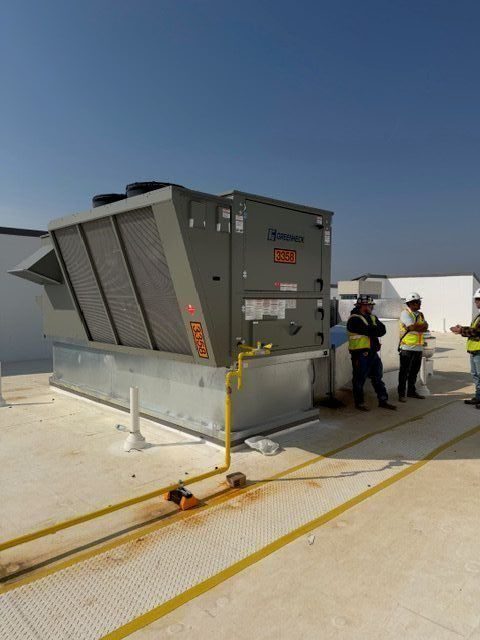
Rooftop units combine heating and cooling components within a single outdoor cabinet installed on building roofs. These systems distribute conditioned air through interior ductwork serving offices, retail spaces, and work areas.
Variable Refrigerant Flow (VRF) Systems
VRF systems regulate refrigerant flow between outdoor compressors and multiple indoor air handlers. This configuration allows different building zones to maintain independent temperature settings.
Heat Pump Systems
Heat pump systems transfer heat between indoor and outdoor environments to provide both heating and cooling. These systems are often installed in office buildings and mixed-use facilities.
Process Chillers
Chillers remove heat from circulating water used in building cooling systems. These systems are commonly installed in manufacturing facilities, medical buildings, and data centers.
Dehumidification Systems
Humidity control systems regulate indoor moisture levels in buildings where environmental stability is required to protect equipment or ensure occupant comfort.
HVAC Installation for Large Facilities
HVAC installation in large buildings requires careful planning to ensure that heating, cooling, and ventilation systems align with the building layout and operational requirements. HVAC system planning is often coordinated with commercial construction services to align equipment layout, duct routing, and system capacity with the building design and project timeline.
Installation planning typically involves:
- Evaluating building square footage and occupancy levels
- Determining airflow distribution through duct systems
- Selecting HVAC equipment capacity suitable for building demand
- Integrating building control systems and thermostats
- Installing rooftop units, chillers, or air handling equipment
Proper HVAC installation helps maintain stable indoor temperature conditions and consistent airflow across different building zones.
HVAC Repair for Building Systems
HVAC repair addresses mechanical, electrical, and airflow issues that prevent HVAC systems in buildings from operating correctly. Because many facilities rely on continuous heating and cooling, equipment components may experience wear after extended operation.
Common repair issues may include:
- Compressor performance problems
- Refrigerant pressure imbalance
- Blower motor or fan failures
- Thermostat communication errors
- Electrical control malfunctions
- Airflow restrictions within duct systems
Repair procedures focus on restoring system operation so buildings maintain a stable indoor climate control.
HVAC Maintenance for Building Equipment
Routine maintenance helps maintain system performance and reduce the likelihood of equipment failure. Scheduled inspections allow technicians to evaluate system components and verify the operation of HVAC equipment.
Maintenance procedures may include:
- Replacing HVAC air filters
- Inspecting evaporator and condenser coils
- Testing blower motor operation
- Verifying thermostat communication
- Checking electrical connections and control components
- Measuring airflow across building zones
Scheduled maintenance helps maintain system efficiency and extend the operational lifespan of HVAC equipment.
Commercial Preventive Maintenance Service Program
Ongoing HVAC maintenance helps reduce unexpected breakdowns and supports long-term equipment performance. Our commercial preventive maintenance service program is designed for facilities that require consistent system reliability and scheduled service.
Specialized HVAC Systems
Certain facilities require specialized HVAC equipment designed to regulate environmental conditions for sensitive equipment or controlled spaces.
Data Center Cooling
Data centers generate significant heat from server equipment. HVAC systems designed for data centers regulate temperature and humidity to protect computing equipment.
Process Cooling Systems
Manufacturing facilities often use cooling systems to regulate temperatures during production operations. Chillers and cooling equipment help maintain stable operating conditions.
Humidity Control Systems
Humidity control equipment regulates moisture levels inside buildings where excessive humidity may affect equipment, materials, or indoor comfort.
Signs HVAC Equipment Needs Service
Building HVAC equipment may display warning signs when performance begins to decline.
Indicators that HVAC service may be required include:
- Uneven temperatures across building zones
- Reduced airflow through ventilation systems
- Unusual noises during equipment operation
- Rising energy consumption without operational changes
- HVAC equipment is cycling frequently
- Difficulty maintaining thermostat settings
These symptoms may indicate airflow problems, electrical issues, or mechanical wear within system components.

We're Here to Help!
Get Your Free Estimate on System Replacements In The Research TriangleWhy HVAC Service Matters for Large Facilities
Building HVAC systems contain mechanical components, electrical controls, refrigerant circuits, and ventilation equipment that must operate together to maintain stable indoor conditions.
Improper system operation may lead to issues such as:
- Increased energy consumption
- Airflow imbalance across ventilation systems
- Equipment component strain
- Temperature instability inside building zones
Routine HVAC service helps maintain equipment performance and supports consistent environmental conditions within business environments.
Why Choose Mechanical HVAC Services
Businesses rely on Mechanical HVAC Services because we provide:
- More than 30 years of HVAC service experience
- Licensed HVAC technicians
- Residential and building HVAC services
- Experience with complex HVAC equipment
- A+ Better Business Bureau rating
When you need commercial services, call the Mechanical HVAC Services team. Schedule your HVAC service today!
$50 Off
Any RepairOffer cannot be combined with any other promotions, discounts, or special offers. Terms and conditions may apply.
Expires: Sep 30, 2026
Expires: Sep 30, 2026
Contact Us Today!
Frequently Asked Questions
Read About Our Customers’ Recent Experiences

Jason H
3 days ago
Service was fast and professional. I thought customer service was a thing of the past, but there guys are bringing it back. Thank You Mechanical HVAC Services.


Virginia Houston
6 days ago
Cory showed up promptly and got our A/C working. He also gave us some great pointers for our upstairs unit. I would definitely recommend this company for HVAC repairs.

heather barkley
2 weeks ago
Quick response. Borden was very professional and hardworking! He took the time to explain and show me the problem and made sure everything was working properly.

Carl Schulz
2 weeks ago
Absolutely outstanding!
Great communications from everyone, quick response, comprehensive evaluation, accurate diagnosis, effective and efficient repairs, and reasonable cost.
And best of all, the technicians were fully capable, on-time, polite, and professional.
I was thoroughly impressed !
Wonderful job, Mechanical HVAC Services !!!
Great communications from everyone, quick response, comprehensive evaluation, accurate diagnosis, effective and efficient repairs, and reasonable cost.
And best of all, the technicians were fully capable, on-time, polite, and professional.
I was thoroughly impressed !
Wonderful job, Mechanical HVAC Services !!!

James Seymour
3 weeks ago
My technician Broden did an outstanding job. He knew exactly how to diagnose my problem and then skillfully fixed it! I am a VERY satisfied customer!

RWR
4 weeks ago
Highly recommend Mechanical HVAC Services. Broden C. provided outstanding customer service and took time to explain the causes of failure and his method of repair. He was patient and explained complex HVAC manners in a method I could easily follow. I will not hesitate to call this company when needed.

earlette conte
1 month ago
Broden the Technician was excellent. Answered all my questions and even offered to change out my filters. Very nice young man. Mechanical HVAC is a reliable and efficient company. I also entered into their annual maintenance program. Highly recommend.

Ramin Sanaie
1 month ago
Great Service Through Home Warranty
Mechanical HVAC Services, Inc. was assigned through my home warranty, and they were fantastic! They responded quickly, were professional, and completed the repair correctly the first time. I was very satisfied with the service and highly recommend them.
A special thanks to Cory, the technician. He was extremely knowledgeable, professional, and took the time to explain the issue and the repair process. He did an excellent job, and I truly appreciated his expertise and attention to detail. Outstanding service overall!
Mechanical HVAC Services, Inc. was assigned through my home warranty, and they were fantastic! They responded quickly, were professional, and completed the repair correctly the first time. I was very satisfied with the service and highly recommend them.
A special thanks to Cory, the technician. He was extremely knowledgeable, professional, and took the time to explain the issue and the repair process. He did an excellent job, and I truly appreciated his expertise and attention to detail. Outstanding service overall!

Diane D.
2 months ago
We sent a request for an issue involving our A/C unit and help was dispatched and the unit fixed within ½ a day. Every step was communicated including Broden's exact arrival time (which could be followed in real time). Broden quickly identified the issue and we're back at being cool! Thx Broden!

Justin Neumann
2 months ago
Great support from the company with an early Monday morning call. The technician, Bailey was very professional and got our air up and running again quickly.

Eddie Brown
2 months ago
Everyone at this company works hard to ensure you receive the best possible experience. They are very knowledgeable and take time to answer any questions and concerns. They are our “go to” HVAC company !

Chris
2 months ago
Great service, new system installed in June. I have a split system A/C and gas furnace. Couldn't be more pleasesd through out the entire process of estimation, answering my questions and scheduling. They care about doing grest work, however they showed me they care just as much about people; the customers they serve and their employees. What matters is highly skilled techs, what matters more is how we treat each in these buisness dealings. Mechanical gets more stars than I can select.

Scott Reel
2 months ago
Professional, thorough, and courteous.
Provide helpful information and answer questions clearly.
Provide helpful information and answer questions clearly.

Jean Holloway
3 months ago
Excellent and quick service on a hot Saturday morning!

Kevin Jones
3 months ago
Had a tech come to help solve a problem. Very knowledgeable and attentive. This company has been my hvac company for a couple years now. I’ve worked with many but they are my favorite.

Joe Kimray
3 months ago
Mechanical HVAC installed, and services our home unit and my business unit. One price includes both annual service calls - and they are always very quick to respond if there is an issue in between.
Great company - highly recommended.
Great company - highly recommended.

Johnny Johnson
3 months ago
Outstanding experience. Honestly and integrity means everything to me. My tech was all that. I highly recommend this company

Nevar Guy
3 months ago
Great experience as the technician was knowledgeable, informative and helpful in understanding our A/C issues.
Recent Reviews
Get Started Today!
Need to Replace Your Current HVAC System?
Mechanical HVAC has you covered! Get a FREE HVAC System Estimate