New HVAC Systems as low as $125 per month *subject to credit approval


Dehumidification Systems
Serving the Triangle Area Since 1994

Dehumidification systems regulate indoor moisture levels by removing excess humidity from the air circulating through HVAC and ventilation systems. These systems are commonly used in commercial and industrial environments where humidity control protects equipment, building materials, and indoor air conditions.
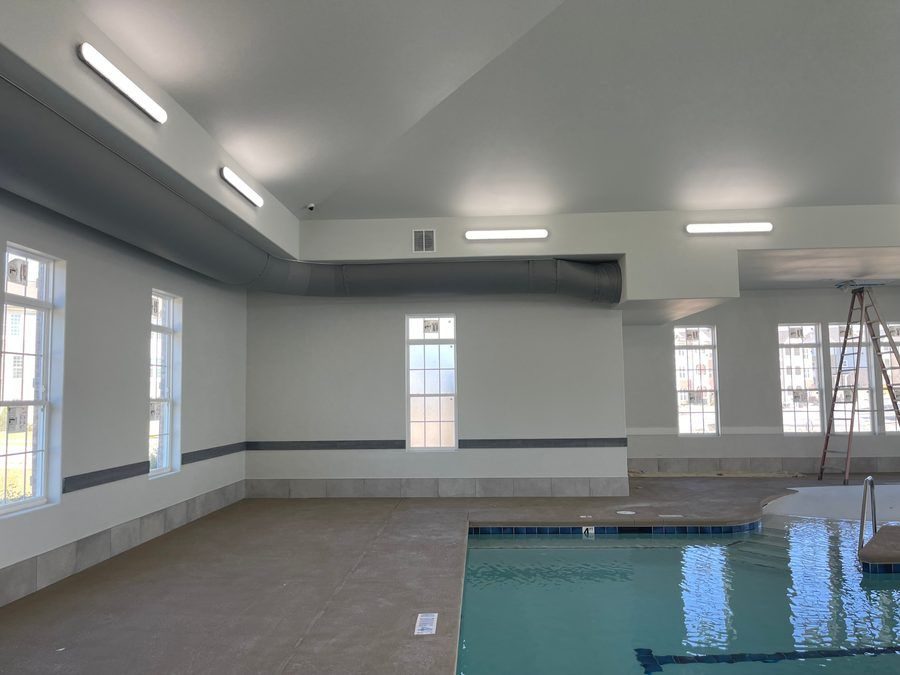
Mechanical HVAC Services provides dehumidification services in Wake Forest, NC, including installation, repair, and maintenance of commercial dehumidification systems for manufacturing facilities, indoor pools, laboratories, and other humidity-sensitive buildings.
Maintaining controlled humidity levels helps prevent condensation, protects building structures, and supports stable indoor environmental conditions for equipment and occupants.
Learn more about our dehumidification services by contacting our team today!
Dehumidification Services
Commercial dehumidification services support humidity-control equipment in large buildings and specialized environments.
Typical services include:
- Installation of commercial dehumidification systems
- Inspection and testing of humidity control equipment
- Preventative maintenance for industrial dehumidifiers
- Replacement of worn or damaged system components
- Evaluation of indoor humidity levels and system performance
- Repair of commercial humidity control equipment
Routine service helps maintain system performance and prevents moisture accumulation that may affect building conditions or sensitive equipment. Humidity control is often incorporated into building design, with commercial construction services considering moisture loads, ventilation layouts, and system placement to support long-term indoor conditions.
Types of Commercial Dehumidification Systems
Commercial facilities may use different types of dehumidification systems depending on building layout and humidity requirements.
Common systems include:
- Pool dehumidification systems used in indoor aquatic facilities
- Industrial humidity control systems used in manufacturing environments
- Ventilation-integrated dehumidifiers connected to air handling systems
- Standalone commercial dehumidifiers are used for localized moisture control
Each system type is designed to regulate humidity levels in large interior spaces while maintaining stable airflow conditions.
Commercial Dehumidification System Installation
Installing commercial humidity control systems requires evaluating the building’s size, airflow distribution, and moisture generation within the facility.
Installation procedures may include:
- Determining humidity load within the building
- Selecting the appropriate dehumidification equipment capacity
- Integrating the system with ventilation or air handling equipment
- Installing condensate drainage systems
- Configuring humidity control sensors and system controls
Proper installation ensures the system can regulate indoor humidity levels consistently without disrupting building airflow patterns.
Commercial Dehumidification System Maintenance
Routine maintenance helps preserve humidity-control performance and extend equipment lifespan.
Maintenance procedures may include:
- Inspecting evaporator and condenser coils
- Cleaning condensate drainage components
- Verifying humidity sensor calibration
- Inspecting airflow pathways and ventilation connections
- Checking electrical components and system controls
Scheduled maintenance helps prevent moisture buildup and ensures the system continues operating within the designed humidity ranges.
Commercial Dehumidification System Repair
Dehumidification systems may require repair when mechanical or control components begin to malfunction.
Repair procedures may involve:
- Replacing damaged coils or compressors
- Repairing electrical control components
- Correcting airflow restrictions within the system
- Replacing faulty humidity sensors
- Repairing condensate drainage systems
Addressing equipment faults helps maintain stable humidity levels and prevents moisture damage inside the building.
Signs a Dehumidification System Needs Service
Changes in building humidity levels may indicate a problem with the dehumidification system.
Common signs include:
- Condensation forming on windows or interior surfaces
- Indoor humidity readings remain above normal levels
- Musty odors within enclosed areas
- Visible moisture accumulation around equipment or ducts
- Humidity sensors are indicating irregular readings
Inspection of the humidity control system can identify the cause and restore normal operation.

We're Here to Help!
Get Your Free Estimate on System Replacements In The Research TriangleWhy Dehumidification Service Matters
Maintaining controlled humidity levels protects both buildings and equipment. Excess moisture can affect structural materials, increase the risk of mold growth, and interfere with sensitive equipment used in laboratories, manufacturing, or data environments.
Routine service helps maintain system reliability and ensures indoor humidity remains within the facility’s appropriate operating range.
Why Choose Mechanical HVAC Services?
- More than 30 years of HVAC service experience
- Licensed HVAC technicians
- Residential and commercial HVAC services
- Humidity control and dehumidification system expertise
- A+ Better Business Bureau rating
$50 Off
Any RepairOffer cannot be combined with any other promotions, discounts, or special offers. Terms and conditions may apply.
Expires: Sep 30, 2026
Expires: Sep 30, 2026
Contact Us Today!
Frequently Asked Questions
Read About Our Customers’ Recent Experiences

Virginia Houston
5 days ago
Cory showed up promptly and got our A/C working. He also gave us some great pointers for our upstairs unit. I would definitely recommend this company for HVAC repairs.


heather barkley
1 week ago
Quick response. Borden was very professional and hardworking! He took the time to explain and show me the problem and made sure everything was working properly.

Carl Schulz
2 weeks ago
Absolutely outstanding!
Great communications from everyone, quick response, comprehensive evaluation, accurate diagnosis, effective and efficient repairs, and reasonable cost.
And best of all, the technicians were fully capable, on-time, polite, and professional.
I was thoroughly impressed !
Wonderful job, Mechanical HVAC Services !!!
Great communications from everyone, quick response, comprehensive evaluation, accurate diagnosis, effective and efficient repairs, and reasonable cost.
And best of all, the technicians were fully capable, on-time, polite, and professional.
I was thoroughly impressed !
Wonderful job, Mechanical HVAC Services !!!

James Seymour
3 weeks ago
My technician Broden did an outstanding job. He knew exactly how to diagnose my problem and then skillfully fixed it! I am a VERY satisfied customer!

RWR
4 weeks ago
Highly recommend Mechanical HVAC Services. Broden C. provided outstanding customer service and took time to explain the causes of failure and his method of repair. He was patient and explained complex HVAC manners in a method I could easily follow. I will not hesitate to call this company when needed.

earlette conte
1 month ago
Broden the Technician was excellent. Answered all my questions and even offered to change out my filters. Very nice young man. Mechanical HVAC is a reliable and efficient company. I also entered into their annual maintenance program. Highly recommend.

Ramin Sanaie
1 month ago
Great Service Through Home Warranty
Mechanical HVAC Services, Inc. was assigned through my home warranty, and they were fantastic! They responded quickly, were professional, and completed the repair correctly the first time. I was very satisfied with the service and highly recommend them.
A special thanks to Cory, the technician. He was extremely knowledgeable, professional, and took the time to explain the issue and the repair process. He did an excellent job, and I truly appreciated his expertise and attention to detail. Outstanding service overall!
Mechanical HVAC Services, Inc. was assigned through my home warranty, and they were fantastic! They responded quickly, were professional, and completed the repair correctly the first time. I was very satisfied with the service and highly recommend them.
A special thanks to Cory, the technician. He was extremely knowledgeable, professional, and took the time to explain the issue and the repair process. He did an excellent job, and I truly appreciated his expertise and attention to detail. Outstanding service overall!

Diane D.
2 months ago
We sent a request for an issue involving our A/C unit and help was dispatched and the unit fixed within ½ a day. Every step was communicated including Broden's exact arrival time (which could be followed in real time). Broden quickly identified the issue and we're back at being cool! Thx Broden!

Justin Neumann
2 months ago
Great support from the company with an early Monday morning call. The technician, Bailey was very professional and got our air up and running again quickly.

Eddie Brown
2 months ago
Everyone at this company works hard to ensure you receive the best possible experience. They are very knowledgeable and take time to answer any questions and concerns. They are our “go to” HVAC company !

Chris
2 months ago
Great service, new system installed in June. I have a split system A/C and gas furnace. Couldn't be more pleasesd through out the entire process of estimation, answering my questions and scheduling. They care about doing grest work, however they showed me they care just as much about people; the customers they serve and their employees. What matters is highly skilled techs, what matters more is how we treat each in these buisness dealings. Mechanical gets more stars than I can select.

Scott Reel
2 months ago
Professional, thorough, and courteous.
Provide helpful information and answer questions clearly.
Provide helpful information and answer questions clearly.

Jean Holloway
3 months ago
Excellent and quick service on a hot Saturday morning!

Kevin Jones
3 months ago
Had a tech come to help solve a problem. Very knowledgeable and attentive. This company has been my hvac company for a couple years now. I’ve worked with many but they are my favorite.

Joe Kimray
3 months ago
Mechanical HVAC installed, and services our home unit and my business unit. One price includes both annual service calls - and they are always very quick to respond if there is an issue in between.
Great company - highly recommended.
Great company - highly recommended.

Johnny Johnson
3 months ago
Outstanding experience. Honestly and integrity means everything to me. My tech was all that. I highly recommend this company

Nevar Guy
3 months ago
Great experience as the technician was knowledgeable, informative and helpful in understanding our A/C issues.

Nevar Guy
3 months ago
The experience was great! The technician was knowledgeable and helpful.
Recent Reviews
Get Started Today!
Need to Replace Your Current HVAC System?
Mechanical HVAC has you covered! Get a FREE HVAC System Estimate